Showing posts with label Vatican Politics. Show all posts

Thursday, March 24, 2011

L.A. Archbishop: Immigration Laws Should Conform to Catholic Social Teaching


Catholic social teaching must inform immigration debate, says LA archbishop
 
By Benjamin Mann

.- At a conference on U.S.-Mexico relations on March 21, Archbishop Jose H. Gomez of Los Angeles explained that the Catholic Church's social teaching can provide essential guidance on the question of immigration, and other dilemmas presented by a globalized economy.

The Mexican-born archbishop, who is also a U.S. citizen, addressed participants gathered at the Catholic University of America in Washington, D.C. for a conference on the Church's role in the immigration debate.

He encouraged audience members – including Mexico's ambassador to the U.S., Arturo Sarukhan, and the U.S. Assistant Secretary of State Eric Schwartz – to consider both the large-scale economic factors driving immigration, and the rights and needs of individuals caught up in these economic changes.

“Globalization has expanded opportunities for businesses and for workers,” Archbishop Gomez acknowledged. “But it has also created new problems in the relationships between our nations.”

“The biggest problem is that while we have developed laws and policies to govern the flow of capital and money, we have no standards for the movement of laborers.”

“Money, capital, and other resources now flow more freely between our nations,” he noted. “But human beings — the men and women who do the work — cannot.”

Archbishop Gomez also spoke frankly about the need to deal realistically and humanely with the reality of unauthorized immigration.

He emphasized that he was interested in the immigration question not primarily as a matter of politics or diplomacy, but as a spiritual and moral issue affecting millions of people.

“I am not a politician or a diplomat or an expert in the global economy,” said the archbishop. “My concern is to be faithful to the Gospel of Jesus Christ, and to defend and promote the dignity of the human person who is made in the image of God.”

He spoke eloquently of the spiritual toll that immigration often takes on those who lack opportunities in their homeland but are exploited or even hated in their new country.

“It gets harder every day to hold onto your cultural identity, your moral compass, your religion, your dignity,” he observed. “You start to believe what people say about you — that you are no good.”

Archbishop Gomez went on to propose a series of measures to address the root causes of immigration, while respecting the human needs and rights of those who have entered the U.S. illegally.

Many aspects of the problem, the archbishop said, arose from underdevelopment within Mexico – a problem that has no instantaneous solution, but demands urgent action.

“We need to find ways to target economic development,” he said, “so that far fewer Mexicans will feel compelled to leave their homes to seek jobs and money in other countries.”

Archbishop Gomez also indicated that the prosperity of nations and transnational corporations must not be placed above the good of the individuals who make such prosperity possible. He strongly urged his fellow U.S. Catholics to consider the human dignity of immigrants, even as they seek to ensure the rule of law.

“Our current policies of enforcement — detentions, and deportations — are a humanitarian tragedy,” he stated. “We are destroying families in the name of enforcing our laws.”

He pointed out that a nation's immigration laws, however important, could not be given absolute priority over the bonds of family – which precede the state itself, according to the natural law.

“Practically speaking,” he stated, “I would like to see a moratorium on new state and local immigration legislation. And, as the U.S. bishops have called for, I would like to see an end to the severe deportation policies.”

Archbishop Gomez also noted that children and women are the “most vulnerable migrants,” who “often fall prey to unscrupulous traffickers” and others seeking to exploit or harm them. He urged policymakers to consider the safety of these populations, and also to remember the needs of all immigrants who are seeking to be reunited with family members by attaining a U.S. visa.

“All of these measures,” said the archbishop, “would make a real difference in the lives of millions of people.

“But they are only temporary,” he noted. “We need to muster the political will to fix our broken immigration system.”

Saturday, February 5, 2011

US Bishops Notify Congress of Policy Goals


This article comes from the National Catholic Reporter.

The bishops want equal access to the Internet for all!
-----------------------------------------------


Letters outline US bishops’ policy priorities 

Feb. 03, 2011

By Michael Sean Winters


The U.S. bishops released two letters to members of Congress late last month that outline “principles and priorities that guide the public policy efforts” of the U.S. Conference of Catholic Bishops.

The first letter, signed by the newly installed conference president, Archbishop Timothy Dolan of New York, exhorts the lawmakers to protect human life from conception to natural death. “Our prayers and hopes [are] that this newly elected Congress will advance the common good and defend the life and dignity of all, especially vulnerable and poor persons whose needs are critical in this time of difficult economic and policy choices.”

The letters were dated Jan. 14 and released to the public Jan. 18.

Dolan pledges to “seek ways to work constructively with the administration and the new Congress and others of goodwill to pursue policies which respect the dignity of all human life and bring greater justice to our nation and peace to our world.”

The second letter – signed by Cardinal Daniel DiNardo of Galveston-Houston, head of the pro-life committee; Bishop Stephen E. Blaire of Stockton, Calif., chairman of the justice and human development committee; and Archbishop José H. Gomez of Los Angeles, chairman of the migration committee – dealt specifically with the issue of health care legislation.

Dolan wrote that the bishops approach public policy “not as politicians but as pastors and teachers … [of] the largest community of faith in the United States, one that serves every part of our nation and is present in almost every place on earth.”

The bishops “will work to retain essential, widely supported policies which show respect for unborn life, protect the conscience rights of health care providers and other Americans, and prevent government funding and promotion of abortion,” Dolan wrote. He asked that the Hyde Amendment, which prevents the use of federal funds for all elective abortion, be enacted as a permanent provision.

Dolan then articulated the bishops’ concern to defend traditional marriage, calling for vigorous enforcement of the Defense of Marriage Act, which limits the degree to which the federal government can recognize same-sex partnerships.

The letter next addressed a variety of concerns about social justice and the poor that range the bishops more on the political left than the political right.

It said that the bishops support economic policies that protect the poor, and call for aid to Catholic schools and continued funding for faith-based organizations that cooperate with the government in providing social services.

Dolan also addressed a novel issue: equal access to the Internet, the first time this issue has received such prominent attention from the bishops’ conference.

He called for comprehensive immigration reform, “recognizing that human dignity comes from God and does not depend on where people were born or how they came to our nation.” Among those items the bishops seek are “a path to earned citizenship, with attention to the fact that international trade and development policies influence economic opportunities in the countries from which immigrants come,” and some effort to prioritize family reunification.

Turning to international affairs, the letter calls for a “responsible” end to the wars in Iraq and Afghanistan, and voices special concern for the religious freedom of Christians and others, noting recent attacks on Christians in Egypt, Iraq and Nigeria, as well as the assassination of a Pakistani official who had spoken against that country’s blasphemy law.

Dolan also urged “continued and persistent leadership” to secure a lasting peace in the Holy Land, support for peaceful change in Sudan, and continued efforts to alleviate the sufferings of the people of Haiti.

Dolan’s letter follows the pattern set by Pope Benedict XVI in his encyclical letter Caritas in Veritate, albeit with far less explicit theological arguments. Dolan’s letter articulates a variety of concerns, all of which flow from the church’s teaching on human dignity, even though some of those concerns are shared mostly with Republicans and others mostly with Democrats.

Dolan’s letter appears to be a far cry from the position held by some conservative Catholics, such as Princeton University Professor Robert George, who argue that the church’s focus should be narrower, restricted to so-called “nonnegotiable” issues like opposition to abortion and support for traditional marriage and religious freedom.

Some might be disappointed to find that immigration comes near the very end, as if it were not a real priority for the bishops and a pressing issue for the country.

The second letter from the three bishops whose committees were most engaged in last year’s health care debate is primarily interesting because it didn’t support efforts to repeal the health care reform law.

“Throughout the last Congress the Catholic bishops of the United States affirmed our strong support for universal access to health care,” the bishops write. “Basic health care for all is a moral imperative, not yet completely achieved.”

They call for Congress to address the health care needs of immigrants, a need unaddressed in last year’s health care law.

The letter from the three bishops enumerates the bishops’ reservations concerning federal funding of abortion and conscience protections for health care workers and Catholics hospitals. They note that these last concerns can all be achieved by enacting other bills that amend the law without repealing it. One such effort, previously introduced in the last Congress, would put the original Stupak-Pitts language back in the law, codifying the Hyde Amendment by law rather than executive order, as President Obama did last year. The Stupak-Pitts Amendment failed last year when no Senate Republican promised to vote for the health care law if the amendment was attached to it.

Another prospective bill would shore up conscience protections for Catholic health care workers, a growing concern of the bishops.

No one seeking to repeal the health care law will likely find solace in this letter.

Both letters exemplify a lack of sharp elbows. The respectful tone, the lack of any demonization or mischaracterization of the views of others, the ideological balance and measured analysis, these all distinguish the bishops’ voices from so many others in the public square.

If the next three years of Dolan’s leadership follow the form and content of this letter, the church’s relationship with the political realm might be less volatile and more constructive then we’ve seen in recent years.

[Based in the nation’s capital, Michael Sean Winters writes the Distinctly Catholic blog.]

Thursday, January 20, 2011

US Ambassador to Vatican Seeks Common Ground


This article comes from the Catholic News Agency.
-----------------------------------

Profile: US ambassador seeks to 'build bridges' with Vatican


.- America’s ambassador to the Holy See says the two sides are working to rebuild trust following the leak of embarrassing diplomatic cables late last year.

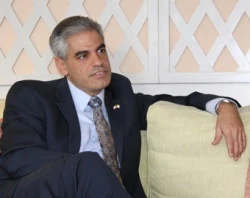
“What brings us together is far, far, far more than what sets us apart, and I want to focus on that," Ambassador Miguel H. Diaz told CNA in a wide-ranging interview at his hilltop residence in Rome Jan. 19.

Ambassador Diaz said that during his 16 months in Rome he has seen “significant signs that show the ongoing commitment of this President, the White House, and our government in general to fostering and deepening this relationship.”

He said the scandal of the U.S. diplomatic cables, released on the website WikiLeaks has not effected the Vatican-U.S. working relationship.

According to an analysis by CNA, more than 700 cables from the U.S. embassy to the Vatican were among the 250,000 State Department cables obtained by WikiLeaks.

To date, only a handful of them has been released. But some of those have proven embarrassing, including one in which a U.S. embassy staffer poked fun at the “poor communications culture” in the Vatican and another in which Vatican Secretary of State Tarcisio Bertone was described as “yes man.”

The WikiLeaks affair has been a bump in the road in an otherwise easy and low-key relationship between the Vatican and the administration of U.S. President Barack Obama, during his first two years in office.

Ambassador Diaz is credited with running a smooth diplomatic operation — especially considering that prior to this he has had no previous diplomatic experience.

The 45-year old Cuban-American was a professor of theology at the College of Saint Benedict and Saint John's University in Minnesota when the call came from the White House in May 2009, five months after President Obama was inaugurated.

Reportedly, he was not first on the list for the position. However, the president’s top choices had to be rejected because they favored abortion or embryonic stem cell research — positions that would have made their appointment appear to be a snub to the Vatican.

The U.S. Senate confirmed Ambassador Diaz in August 2009, and since then he and his wife, also a theology professor, have been living with their four children in the ambassador's residence atop Rome’s Janiculum Hill.

When Pope Benedict XVI received Ambassador Diaz for the first time to accept his credentials, he did so warmly. But he made a point of emphasizing the Church’s differences with the U.S. administration.

“I think particularly of the need for a clear discernment with regard to issues touching the protection of human dignity and respect for the inalienable right to life from the moment of conception to natural death, as well as the protection of the right to conscientious objection on the part of health care workers, and indeed all citizens,” the Pope told the new ambassador.

Despite broad disagreements on basic policies, Ambassador Diaz said he is focusing on the values and the interests the two sides share.

"I think it's important to recognize that there are differences,” he said. “But I think it's important not to be paralyzed by those differences. The things that we have in common far exceed the things that divide us," said Ambassador Diaz.

As the ninth U.S. ambassador, Diaz said he is really "standing on the shoulders" of the "giants" that have gone before him.

Unofficial relations between the two states go back to the birth of America, when President George Washington assured Pope Pius VI that the Pope would have full freedom to appoint bishops in the new land.

It would take until President Ronald Reagan in 1984 for the U.S. to establish its first official embassy here. At that time, it was widely perceived that the U.S. president saw the Vatican and then-Pope John Paul II as an important ally in the fight against communism.

The embassy recently celebrated its 27th anniversary. Ambassador Diaz has as a staff of 19 — a formidable presence for promoting U.S. foreign policy at the world's smallest state.

"The size is really inversely proportional to the scope of influence," said Ambassador Diaz. “You can't just think of the Holy See as boxed with the Vatican City walls. We have to think of it as this vast network."

Since his Senate confirmation hearings, Ambassador Diaz has spoken of his vision for the embassy as one of “building bridges.”

And he has pursued that strategy during his 16-month tenure. He has worked diligently to build relationships not only with Vatican officials, but also with the wider institutions of the universal Church — pontifical universities, religious communities, even hospitals, non-profits and humanitarian agencies.

The embassy has sponsored several high-profile meetings to highlight areas of mutual interest.

An embassy-sponsored conference in 2009 brought professionals to the city to raise awareness of the need to stop mother-child transmission of AIDS. The embassy co-sponsored a concert with the Church aid agency Caritas to raise money for Haitian earthquake victims.

An embassy-sponsored conference at the Pontifical Gregorian University last October encouraged members of different faith traditions to come together in "building bridges." At the event, the director of the White House's Office of Faith-Based and Neighborhood Partnerships, Joshua DuBois, gave the keynote address.

But Ambassador Diaz said much of his diplomatic work is done in one-on-one conversations — what he called "diplomacy at the table" during luncheons and dinners, and "targeted diplomacy" with Vatican contacts through more formal channels.

The issues of concern to the U.S. and the Vatican are broad and far-reaching.

"One of the greatest challenges,” he said, was how the “human family” is going to “reconcile” its “incredible diversity” of religions and cultures. This diversity, he said, “increasingly threatens to tear us apart.”

On that note, Ambassador Diaz called Pope Benedict’s annual speech to diplomats Jan. 10 “ambitious.”

The Pope used strong language to condemn religious discrimination and persecution around globe, especially in the Middle East, North Africa and China.

"The task of building bridges is essential if we are to bring about reconciliation and peace, and if we are going to tackle ongoing problems such as the trafficking of persons and basic violations of human dignity — including violations for persons to exercise a right to religious freedom," Ambassador Diaz said.

He sees a "bridge-building" opportunity in Pope Benedict's call for world religious leaders to gather in Assisi next October to pray for peace. It is fitting that such an encounter should take place in the birthplace of St. Francis, whose name is associated with peace and reconciliation.

In an "interconnected" world, St. Francis’ message that all things are tied together is important, Ambassador Diaz said. The day of prayer called by the Pope has the potential to "do what religion is intended to do — bring people together and not drive them apart."

"In this interdependent world, civic leaders cannot act alone, no nation can act alone, and the contribution of religious leaders is essential in the building of peace, the defending of human dignity, the fight against any type of abuse. And certainly the religious leaders have a central role to play in that outgoing, noble task," Ambassador Diaz said.

He identified ending human trafficking and promoting education and migration issues as the embassy's top priorities.

"There are so many different areas that wherever the dignity of the human person is violated, that persons … and organizations associated with the Church can help," he explained.

"I think that's where the effective work of building those bridges and defending that dignity would come in, the day-to-day exercise of this relationship."

He does not downplay the continued differences between the U.S. and the Holy See on issues such as abortion, embryonic stem cell research, the homosexual lifestyle, and the promotion of condoms for AIDS prevention.

No diplomatic relationship finds both sides seeing eye-to-eye on every issue, Ambassador Diaz noted. "That's the ideal, the ideal will never be there."

He prefers to concentrate on his responsibility as President Obama's personal representative to the Holy See.

"As a person of integrity, I would not be sitting here if I did not believe that there was a significant convergence in my ability to carry out this duty here at the Holy See,” he said. “I'm defending the dignity of human persons in different ways. I am building bridges. And these are fundamental tenets of this administration and fundamental tenets of who I am as a person.”

He would like his time as ambassador to be remembered as one in which U.S. foreign policy and the common interests of the Holy See were united "to advance the common good of the human family."

"If I can do that, even if it's just in little ways, during my tenure here, then I'll call it a success,” he said. “I'll be happy that I did my job, which is to answer the call — certainly of President Obama and of my country, to serve it — and also the call of the human family and the Church to advance the common good."

Wednesday, January 19, 2011

US Catholic Bishops Name Legislative Agenda


This article comes from Catholic Culture.
-----------------------------

US bishops outline 9 legislative priorities
Archbishop Timothy Dolan of New York, president of the United States Conference of Catholic Bishops (USCCB), outlined the conference’s nine legislative priorities for the coming year. The top priority, he said in a letter to members of Congress, is the protection of innocent human life from abortion and euthanasia.
Most fundamentally, we will work to protect the lives of the most vulnerable and voiceless members of the human family, especially unborn children and those who are disabled or terminally ill [emphasis in text]. We will consistently defend the fundamental right to life from conception to natural death. Opposed to abortion as the direct killing of innocent human life, we will encourage one and all to seek common ground, reducing the number of abortions by providing compassionate and morally sound care for pregnant women and their unborn children. We will oppose legislative and other measures to expand abortion. We will work to retain essential, widely supported policies which show respect for unborn life, protect the conscience rights of health care providers and other Americans, and prevent government funding and promotion of abortion. The Hyde amendment and other provisions which for many years have prevented federal funding of abortion have a proven record of reducing abortions, and should be codified in permanent law. Efforts to force Americans to fund abortions with their tax dollars pose a serious moral challenge, and Congress should act to ensure that health care reform does not become a vehicle for such funding.

“In close connection with our defense of all human life and particularly the most vulnerable among us, we stand firm in our support for marriage which is and can only be a faithful, exclusive, lifelong union of one man and one woman,” he continued.
There is good reason why the law has always recognized this, and why it should continue to do so. In a manner unlike any other relationship, marriage makes a unique and irreplaceable contribution to the common good of society, especially through the procreation and education of children. Children need, deserve and yearn for a mother and a father. All human societies in every era of history, differing greatly among themselves in many other ways, have understood this simple wisdom. No other kinds of personal relationships can be justly made equivalent or analogous to the commitment of a husband and a wife in marriage, because no other relationship can connect children to the two people who brought them into the world. For this reason, we will continue to vigorously support the Defense of Marriage Act (DOMA) and strongly oppose legislative or executive measures that seek to redefine or erode the meaning of marriage. We suggest Congressional oversight of executive actions that have the effect of undermining DOMA, such as the expansion of spousal benefits to two persons of the same sex, and the weak defense of DOMA in court against constitutional challenge. We will seek to reflect respect for the family in every policy and program, to protect the rights of children, and to uphold the rights and responsibilities of mothers and fathers to care for their children. We will also continue to monitor legislation and federal regulations that protect our children and families from the destructive repercussions of pornography, which degrades human sexuality and marital commitment.
The conference’s next four concern economic challenges, equity in educational funding for private schools, assisting faith-based groups in ways that do not require them “to abandon their identity or mission,” and “equal access to the Internet for all, including religious and non-profit agencies.” Archbishop Dolan then touched upon universal health care:
The Catholic Bishops of the United States have worked for nearly a century to assure health care for all, insisting that access to health care is a basic human right and a requirement of human dignity. Basic health care for all is a moral imperative, not yet completely achieved. We remain committed to our three moral criteria: 1) Ensure access to quality, affordable, life-giving health care for all; 2) Retain longstanding requirements that federal funds not be used for elective abortions or plans that include them, and effectively protect conscience rights; and 3) Protect the access to health care that immigrants currently have and remove current barriers to access. We will continue to devote our efforts to improving and correcting serious moral problems in the current law, so health care reform can truly be universal and life-affirming.
The conference’s final two legislative priorities concern comprehensive immigration reform and international affairs, with an emphasis on “responsible transitions to end the wars in Iraq and Afghanistan” and promoting “religious freedom for all, acting against religious repression of our fellow Christians and others.”

Tuesday, January 18, 2011

Egyptian MPs Criticize Pope, EU Over Copt Remarks


This article comes from Al-Ahram.
--------------------------


EU and Vatican criticised
 
The People's Assembly launched a scathing attack against the European Parliament accusing it of disseminating false reports about the "repression of Christians" in Egypt, reports Gamal Essam El-Din
 
Egyptian MPs, belonging to the ruling National Democratic Party (NDP) and opposition, opened fire on the Brussels-based European Parliament, accusing it of interfering in Egypt's internal affairs. Speaker of the People's Assembly Fathi Sorour told MPs in a session on Monday morning that he condemned the way in which the European Parliament had "tried to exploit the attack which hit the Two Saints Church on the New Year's Eve in order to imply that there is a systematic policy of repression against Coptic Christians in Egypt". Sorour said that in a meeting with a delegation from the Bundestag (German parliament) yesterday, he had stressed that "the terrorist attack against the Alexandrian church targeted Muslims and Christians alike and the European Parliament's statements about repression of Christians in Egypt are entirely unfounded".

Supporting Sorour, senior NDP MPs accused the European Parliament of propagating lies about Egypt. Abdel-Ahad Gamaleddin, NDP spokesman in the People's Assembly, insisted that "the European Parliament's statement claiming that Coptic Christians face persecution shows how most European institutions are completely ignorant of the situation in Egypt."

Chairman of the assembly's National Security and Defence Committee Amin Radi urged the European Parliament to exercise restraint before publishing false statements about religious conditions in Egypt.

"The European Parliament should fully understand that the bomb attack against the church was aimed at sowing discord between Christians and Muslims in Egypt," Radi said.

The Ghad Party's Ragab Hilal Hemeida accused the European Parliament of offering money to its clients in Egypt to spread lies and instill a kind of "creative chaos in the country".

MPs also attacked Pope Benedict XVI for issuing a statement that reflected "the spirit of the Crusades".

"Please, Pope of the Vatican," pleaded independent Coptic MP Gamal Assad Abdel-Malak, "stop recalling the spirit of the Crusades. Copts in Egypt do not face repression and are not in need of the protection of the Christian West."

"Since Napoleon Bonaparte's French Expedition and until the Zionist colonialist campaigns of today the West has been trying to exploit what it calls the Coptic issue and other religious minorities to interfere with the internal affairs of Egypt. Yes, there are some discriminatory policies against the Copts but these are nowhere near a systematic policy of persecution."

Abdel-Malak urged the government "not to dig its head into the sand like an ostrich and assume everything is OK with Egypt's Copts". He asked the ruling NDP to enter into "open discussion" of Coptic grievances "so as to close the door to foreign meddling".

Mossad, the Israeli intelligence agency, was also singled out by MPs for attack. Saad Al-Gammal, chairman of the assembly's Arab Affairs Committee, charged that both "the Mossad and the extremist Islamist organisation Al-Qaeda are seeking to inflame sectarian strife in countries like Egypt, Iraq, Lebanon and Yemen."

"Mossad now serves the interests of Al-Qaeda and vice-versa. Neither will be able to break the national unity of Egypt."

Raafat Seif, spokesman of the leftist Tagammu Party, refused to join the anti-European Parliament tirade, saving his criticism for the proliferation of policies that allowed the growth of the kind of intolerance that culminated in the Alexandria bombing.

"Such policies include the growth of extremist education in private and government schools, the use of television and print media and mosques to spread hate against others, including Copts, describing them as infidels," said Seif.

NDP MPs tried to stop Seif from continuing until Sorour intervened. He went on to denounce "the extremist ideology of Wahabi Islam which had imposed itself on Egypt at the expense of the moderate and centrist ideology of Al-Azhar, which calls for tolerance, freedom of religion and inter-faith dialogue".

In response, Sorour urged MPs not to link Coptic grievances with the Alexandria bomb attack. "In so doing," he argued, "MPs are repeating foreign allegations that the bomb attack is somehow linked to Coptic grievances and the repression of Christians in Egypt."

Minister of State for Legal and Parliamentary Affairs Moufid Shehab reiterated the argument that the bombing was an attempt to sow divisions among Egyptians. He warned MPs against confusing issues "by connecting the crime to Coptic grievances".

NDP MPs also criticised coverage of the attack on television channels. "Coverage of the bombing was at odds with the national interest," said Abdel-Ahad. "Channels which refuse to toe the national line should be closed."

Zakaria Azmi, chief of the presidential staff and a heavyweight NDP MP, accused daily newspapers of being so desperate to obtain a scoop that they had published conflicting reports about the results of the investigation into the Alexandria attack.

"Such irresponsibility could force citizens to lose confidence in the investigating authorities," he said. Newspapers should remember that the penal code criminalises all forms of intervention in ongoing investigations," said Azmi.

Catholic Figures Played Major Role in START Treaty


The Vatican has worked hard to spread the ideas of nuclear non-proliferation.  

And why is that?

Because the Vatican doesn't have nuclear weapons -- it wants to level the political playing field.

This article comes from the National Catholic Reporter.
------------------------------

Catholics had a major role in passing nuclear treaty

By Dennis Sadowski


WASHINGTON -- As Democratic and Republican senators pressed their divergent views on the New START agreement with Russia outlining the next phase of nuclear disarmament during final debate in December, a wide array of Catholics played a major role in getting the pact ratified.

From political insiders to people in the pews, Catholics provided a moral perspective on the need for the treaty, helping build the final 71-26 margin for ratification, several people working on the issue told Catholic News Service.

The effort by Catholics also helped keep the vote on schedule, preventing it from being pushed into 2011 when the likelihood of ratification would have been dimmer because of the loss of six Democratic seats in the Senate.

Both houses of the Russian parliament are reviewing the treaty and are expected to ratify it in the coming weeks.

No one contacted by CNS said that without the Catholic effort the treaty would have failed. But they acknowledged that the involvement of such a broad array of Catholic voices -- from Archbishop Edwin F. O'Brien of Baltimore, who formerly headed the U.S. Archdiocese for the Military Services, to Dave Robinson, executive director of Pax Christi USA -- ratification became much easier to accomplish in an era where bipartisan cooperation in Congress is almost nonexistent.

David Culp, legislative representative for the Quaker Friends Committee on National Legislation, heaped high praise on Catholics. He pointed to the efforts by the U.S. Conference of Catholic Bishops as well as key Catholic members of Congress and the Obama administration for leading the way.

"(Catholics) definitely have been the most active and most important faith-based group working on this," Culp said. "This has been an amazing effort (by Catholics) from top to bottom."

Pax Christi's Robinson described the Catholic effort as one that has naturally evolved given the church's increasingly stronger stance against nuclear weapons.

"This is an example of people both on the inside and the outside able to apply their values and faith traditions on a really important public policy matter that is going to enhance security and move us down to the road to a nuclear weapons-free world," he said.

The new treaty calls for both countries to reduce their strategic arsenals -- weapons deployed on long-range missiles, bombers and submarines -- to 1,550 each. Under the previous START pact, which expired in December 2009, both countries reduced their strategic arsenals to 2,200 weapons each.

Key Catholic insiders working for the treaty's ratification included the likes of Vice President Joe Biden and aide Brian McKeon; Sen. John Kerry, D-Mass., chairman of the Committee on Foreign Relations; Denis McDonough, deputy national security adviser; and Rose E. Gottemoeller, assistant secretary in the Department of State's Bureau of Verification, Compliance and Implementation, who was the lead U.S. negotiator of the agreement.
Gottemoeller, who holds a degree in Russian from Georgetown University, told CNS she welcomed the "high level of interest" in nuclear disarmament among people of faith, especially Catholics and evangelicals.

"It was important to engage people's interest and to have the Catholic bishops of the United States and Catholic organizations to step forward and speak about the importance of the issue and engage the public," she said.

At the White House, two staffers speaking on background, said their work was motivated by the president's desire to get the treaty ratified as opposed to adhering to the teaching of any particular faith. Both welcomed the comments of people of faith, saying those views were "taken into account" as strategies for approaching senators sitting on the fence were formed.

Stephen Colecchi, director of the USCCB's Office of International Justice and Peace, explained that the bishops staked out their position on the treaty soon after Obama announced April 8 in Prague that he and Russian President Dmitry Medvedev signed the arms reduction pact.

"The fact that Catholics were leading the effort is not a surprise to me," Colecchi said.

He said 30 bishops -- a much larger number than on most legislative issues other than same-sex marriage, abortion and health care -- contacted senators at various times in 2010.

Leading the way was Bishop Howard J. Hubbard of Albany, N.Y., chairman of the bishops' Committee on International Justice and Peace. He regularly joined teleconferences and sent letters to the Senate on behalf of the conference.

The bishops were backed by hundreds of letters from religious orders as well as average Catholics who responded to a series of legislative alerts issued by Colecchi's office.

"The church's teaching on this is very clear and it's very clear on the issue of protecting human life and human dignity," Colecchi said, explaining why large numbers of people responded to the arms control issue.

Outside of the conference, as expected, organizations such as the Maryknoll Office of Global Concerns and Network, a Catholic social justice lobbying organization, also made their voices heard.

This time though, they were joined by the National Association of Evangelicals and organizations such as the Two Futures Project, headed by the Rev. Tyler Wigg-Stevenson, whose influence on social issues is gaining favor rapidly among more traditionally conservative Christians.

"This is an example of where the church's teaching formed and motivated people," Colecchi said. "I think we can be very proud of our church and very proud of our bishops."

Monday, January 17, 2011

Pope Meets UNESCO Director


This article comes from Zenit.
-----------------------

Holy Father Greets UNESCO Director

VATICAN CITY, JAN. 17, 2011 (Zenit.org).- Benedict XVI received in audience today Irina Bokova, director-general of the United Nations Educational, Scientific and Cultural Organisation (UNESCO).

A communique of the Vatican press office reported that the "cordial discussions provided an opportunity for a fruitful exchange of opinions on UNESCO's efforts in the field of education, sciences and culture, which are also of particular interest to the Holy See as it participates actively in the work of the organization."

"On this topic," the noted continued, "emphasis was given to the need to ensure integral human development, and to the importance of guaranteeing quality education for everyone."

The Vatican reported that the discussion also addressed "certain aspects of protecting world cultural heritage, and of defending the environment, as well as to the importance of dialogue between cultures."

Bokova subsequently went on to meet with Cardinal Tarcisio Bertone, the Holy Father's secretary of state, who was accompanied by Archbishop Dominique Mamberti, secretary for relations with states.

New Book Explains How John Paul II Battled Soviets


This article provides a small glimpse into the strategic encounter between the Vatican and Soviet Communism in 80s -- an encounter that few knew was going on at the time.  Just as John Paul II battled the Soviets in secret, so too does Benedict XVI battle the Chinese, Pakistan, and a host of other Vatican "enemies."  We don't see what's going on or know exactly how everything is taking place, but we can be sure that the battle is taking place nonetheless.


This article comes from the Catholic Herald (UK).
----------------------------------

New details emerge of John Paul II's "war" against Communism

By John Thavis

That Pope John Paul II was a pivotal figure in the fall of European Communism is accepted as a truism, but many details of that drama have remained hidden in archives.

A US biographer of the late pope has now provided particulars of what he describes as the full-scale war by Communism against the Catholic Church, and Pope John Paul’s astute and successful counter-strategy.

The Polish pope displayed political savvy and “a shrewdness that combined steadiness of strategic vision with tactical flexibility”, George Weigel told an audience of seminarians, diplomats and Vatican officials at the Pontifical North American College on Sunday.

One of Pope John Paul’s moves, Mr Weigel said, was to appoint as his own Secretary of State Cardinal Agostino Casaroli, the architect of the Vatican’s “Ostpolitik” efforts to reach workable compromises with communist regimes.

By doing so, he “created tactical advantages for the Church: as the pope preached moral revolution over the heads of Communist regimes, speaking directly to their people, [Cardinal] Casaroli continued his diplomacy, thus denying the Communists the opportunity to charge that the Church had reneged on its commitment to dialogue,” Mr Weigel said.

Mr Weigel said he based his conclusions on previously secret cables and memos that have emerged from behind the former Iron Curtain. He came across the information while researching his latest book on the life of Pope John Paul, The End and the Beginning, which looks at the pope’s final years and evaluates his legacy.

As a point of orientation, he quoted Cardinal Stanislaw Dziwisz, Pope John Paul’s longtime secretary, who once remarked about the Church’s battle with Poland’s Communist regime: “You must understand that it was always ‘them’ and ‘us’.” What he meant, Mr Weigel said, was that “the struggle between Communism and Catholicism could not be understood as a matter of episodic confrontations… It was all war, all the time.”

Certainly that was how Communist leaders from Moscow to Budapest saw it, Mr Weigel said. He catalogued efforts by Communist regimes to place spies in local Catholic hierarchies and the Vatican, to exploit the Church’s moves toward openness and dialogue, to create ecumenical confusion and to compromise Church leaders by planting false stories.

In 1983, Mr Weigel recounted, the Polish security police even decided to blackmail Pope John Paul. The instrument chosen was a fake diary said to have been written by a deceased female employee of the Archdiocese of Krakow, in which the diarist reported she had been the future pope’s lover. The plot fell apart when one of the conspirators, after successfully planting the diary in the home of a Krakow priest, got drunk, crashed his car and blabbed to police about what he’d just done.

Although the story has a Keystone Kops flavour, Mr Weigel noted that the same security police operative would surface a year and a half later – as one of the men who beat Solidarity activist Fr Jerzy Popieluszko to death and dumped his body in the Vistula River.

Mr Weigel said Soviet bloc intelligence services tried to manipulate the debates of the Second Vatican Council for political ends, a process that continued as the “Ostpolitik” policy of the Vatican developed and prevailed. He said the Hungarian regime used the Vatican’s diplomatic opening to take control of the Catholic Church in the country; most bishops nominated after 1964 were co-operators with internal security and foreign intelligence services, he said.

At the Pontifical Hungarian Institute in Rome, all the rectors and half the students in the late 1960s were trained agents of Hungarian secret intelligence, he said.

Mr Weigel said Communist moles were placed successfully at Vatican Radio, at the Vatican newspaper and in pontifical universities. When Pope John Paul II was elected, he took some counter-intelligence steps; for one thing, materials dealing with Poland were no longer archived in the Secretariat of State but were kept in the papal apartment “where there was no chance for mischief-makers to prowl around”, Mr Weigel said.

When Pope John Paul met leaders such as Soviet Foreign Minister Andrei Gromyko, the pope decided not to keep a written record of their conversations, so that the notes would not fall into the wrong hands. Instead, Mr Weigel said, the pope and then-Mgr Dziwisz would discuss the encounters, and the secretary kept notes in diaries that remained under his control.

Mr Weigel said he thinks some lessons can be drawn by the Church’s experience with European Communism, as it looks to present challenges in the world’s remaining Communist states and in Islamic states. For one thing, he said, Vatican efforts to reach beneficial compromises with communist powers “rarely, if ever, paid significant dividends”.

He said a much more valuable witness was provided by church leaders who spoke courageously against the regimes, sometimes paying with their lives.

“Deeply committed and politically shrewd Christian pastors and laity eventually won out over communism. The blood of martyrs, however, was the seed of victory. Their sacrifice, and what we can learn from it about the cardinal virtue of fortitude – courage – must never be forgotten,” he said.

Thursday, January 13, 2011

Vatican-Egypt Ties Strained


This article comes from Zenit.
--------------------------------

Recalled Egypt Envoy Meets 1st With Vatican Official

Holy See Affirms Appreciation for Nation's Efforts to Stop Religiously-Motivated Conflict

VATICAN CITY, JAN. 12, 2011 (Zenit.org).- Egypt has recalled to Cairo its ambassador to the Holy See in a show of displeasure at the Pope's defense of the country's Copts. Before leaving the Vatican, she met with Archbishop Dominique Mamberti, secretary for relations with states.

Jesuit Father Federico Lombardi informed of Tuesday's meeting between the archbishop and Lamia Aly Hamada Mekhemar.

"During the meeting the ambassador, who is to return to Cairo for consultations with the Egyptian foreign ministry, described the concerns of her government at this present difficult time," a Vatican communiqué explained. "She was also able to receive information and gather the elements necessary in order to report adequately on the Holy Father's recent remarks concerning, in particular, religious freedom and the protection of Christians in the Middle East."

On Jan. 1, a suicide bomber killed 21 Copts as they were leaving the Divine Liturgy at Saints Church in Alexandria, Egypt. Benedict XVI has affirmed his solidarity with the Orthodox Copts, most recently last Sunday during the Angelus address, and Monday during his New Year's discourse to the diplomatic corp.

On Sunday, his comment came in the context of his greeting to a group of Italian Parliamentarians who had attended the midday Angelus address as a show of solidarity with the Egyptian Copts. His Monday statement noted the persecution of Christians in Iraq, after which he noted: "In Egypt too, in Alexandria, terrorism brutally struck Christians as they prayed in church. This succession of attacks is yet another sign of the urgent need for the governments of the region to adopt, in spite of difficulties and dangers, effective measures for the protection of religious minorities."

According to the Vatican communiqué, the ambassador's meeting with Archbishop Mamberti gave the prelate a chance to affirm "how the Holy See shares the emotions of all the people of Egypt, struck by the attack in Alexandria."

He also "gave assurances that it also fully shares the Egyptian government's concern 'to avoid the escalation of religiously motivated conflict and tensions,' and appreciates the efforts being made to that end."

According to a statement from the Egyptian foreign ministry, the call for the ambassador to return to Cairo is because "new statements from the Vatican […] are considered by Egypt as unacceptable interference in its internal affairs," the AFP reported.

The ambassador told Rome Reports that "we do not share the view that Christians are persecuted in our part of the world."

Wednesday, January 12, 2011

Venezuelan Bishops Defy Chavez

This article comes from the Washington Post.
----------------------------------

Catholic leaders warn of 'totalitarian' Venezuela

CARACAS, Venezuela -- Roman Catholic leaders in Venezuela are calling for President Hugo Chavez to give up special lawmaking powers granted to him by his congressional allies.

The Venezuelan Bishops' Conference condemned a package of laws approved last month by the National Assembly, including one that grants Chavez power to enact laws by decree for the next 18 months. Chavez gained those powers shortly before a new congress took office with more opposition lawmakers.

A statement from the bishops released Tuesday accuses Chavez of trying to impose a totalitarian system in Venezuela.

Chavez and the bishops have feuded for years. Chavez has accused the Catholic leadership of neglecting the poor and of siding with his opponents and the rich.

Tuesday, January 11, 2011

Papal Address to the Diplomatic Corps


This speech comes from the official Vatican website.
-----------------------------------------

ADDRESS OF HIS HOLINESS POPE BENEDICT XVI
TO THE MEMBERS OF THE DIPLOMATIC CORPS
Regia Hall
Monday, 10 January 2011


Your Excellencies,
Ladies and Gentlemen,

I am pleased to welcome you, the distinguished representatives of so many countries, to this meeting which each year assembles you around the Successor of Peter. It is a deeply significant meeting, since it is a sign and illustration of the place of the Church and of the Holy See in the international community. I offer my greetings and cordial good wishes to each of you, and particularly to those who have come for the first time. I am grateful to you for the commitment and interest with which, in the exercise of your demanding responsibilities, you follow my activities, those of the Roman Curia and thus, in some sense, the life of the Catholic Church throughout the world. Your Dean, Ambassador Alejandro Valladares Lanza, has interpreted your sentiments and I thank him for the good wishes which he has expressed to me in the name of all. Knowing how close-knit your community is, I am certain that today you are also thinking of the Ambassador of the Kingdom of the Netherlands, Baroness van Lynden-Leijten, who several weeks ago returned to the house of the Father. I prayerfully share your sentiments.

As a new year begins, our own hearts and the entire world continue to echo the joyful message proclaimed twenty centuries ago in the night of Bethlehem, a night which symbolizes humanity’s deep need for light, love and peace. To the men and women of that time, as to those of our own day, the heavenly hosts brought the good news of the coming of the Saviour: “The people who walked in darkness have seen a great light; those who dwelt in a land of deep darkness, on them has light shined” (Is 9:1). The mystery of the Son of God who became the son of man truly surpasses all human expectations. In its absolute gratuitousness this saving event is the authentic and full response to the deep desire of every heart. The truth, goodness, happiness and abundant life which each man and woman consciously or unconsciously seeks are given to us by God. In longing for these gifts, each person is seeking his Creator, for “God alone responds to the yearning present in the heart of every man and woman” (Post-Synodal Apostolic Exhortation Verbum Domini, 23). Humanity throughout history, in its beliefs and rituals, demonstrates a constant search for God and “these forms of religious expression are so universal that one may well call man a religious being” (Catechism of the Catholic Church, 28). The religious dimension is an undeniable and irrepressible feature of man’s being and acting, the measure of the fulfilment of his destiny and of the building up of the community to which he belongs. Consequently, when the individual himself or those around him neglect or deny this fundamental dimension, imbalances and conflicts arise at all levels, both personal and interpersonal.

This primary and basic truth is the reason why, in this year’s Message for World Day of Peace, I identified religious freedom as the fundamental path to peace. Peace is built and preserved only when human beings can freely seek and serve God in their hearts, in their lives and in their relationships with others.

Ladies and Gentlemen, your presence on this solemn occasion is an invitation to survey the countries which you represent and the entire world. In this panorama do we not find numerous situations in which, sadly, the right to religious freedom is violated or denied? It is indeed the first of human rights, not only because it was historically the first to be recognized but also because it touches the constitutive dimension of man, his relation with his Creator. Yet is this fundamental human right not all too often called into question or violated? It seems to me that society, its leaders and public opinion are becoming more and more aware, even if not always in a clear way, of this grave attack on the dignity and freedom of homo religiosus, which I have sought on numerous occasions to draw to the attention of all.

I did so during the past year in my Apostolic Journeys to Malta, Portugal, Cyprus, the United Kingdom and Spain. Above and beyond the diversity of those countries, I recall with gratitude their warm welcome. The Special Assembly for the Middle East of the Synod of Bishops, which took place in the Vatican in October, was a moment of prayer and reflection in which our thoughts turned insistently to the Christian communities in that part of the world which suffer greatly because of their fidelity to Christ and the Church.

Looking to the East, the attacks which brought death, grief and dismay among the Christians of Iraq, even to the point of inducing them to leave the land where their families have lived for centuries, has troubled us deeply. To the authorities of that country and to the Muslim religious leaders I renew my heartfelt appeal that their Christian fellow-citizens be able to live in security, continuing to contribute to the society in which they are fully members. In Egypt too, in Alexandria, terrorism brutally struck Christians as they prayed in church. This succession of attacks is yet another sign of the urgent need for the governments of the region to adopt, in spite of difficulties and dangers, effective measures for the protection of religious minorities. Need we repeat it? In the Middle East, Christians are original and authentic citizens who are loyal to their fatherland and assume their duties toward their country. It is natural that they should enjoy all the rights of citizenship, freedom of conscience, freedom of worship and freedom in education, teaching and the use of the mass media” (Message to the People of God of the Special Assembly for the Middle East of the Synod of Bishops, 10). I appreciate the concern for the rights of the most vulnerable and the political farsightedness which some countries in Europe have demonstrated in recent days by their call for a concerted response on the part of the European Union for the defence of Christians in the Middle East. Finally, I would like to state once again that the right to religious freedom is not fully respected when only freedom of worship is guaranteed, and that with restrictions. Furthermore, I encourage the accompaniment of the full safeguarding of religious freedom and other humans rights by programmes which, beginning in primary school and within the context of religious instruction, will educate everyone to respect their brothers and sisters in humanity. Regarding the states of the Arabian Peninsula, where numerous Christian immigrant workers live, I hope that the Catholic Church will be able to establish suitable pastoral structures.

Among the norms prejudicing the right of persons to religious freedom, particular mention must be made of the law against blasphemy in Pakistan: I once more encourage the leaders of that country to take the necessary steps to abrogate that law, all the more so because it is clear that it serves as a pretext for acts of injustice and violence against religious minorities. The tragic murder of the governor of Punjab shows the urgent need to make progress in this direction: the worship of God furthers fraternity and love, not hatred and division. Other troubling situations, at times accompanied by acts of violence, can be mentioned in south and south-east Asia, in countries which for that matter have a tradition of peaceful social relations. The particular influence of a given religion in a nation ought never to mean that citizens of another religion can be subject to discrimination in social life or, even worse, that violence against them can be tolerated. In this regard, it is important for interreligious dialogue to favour a common commitment to recognizing and promoting the religious freedom of each person and community. And, as I remarked earlier, violence against Christians does not spare Africa. Attacks on places of worship in Nigeria during the very celebrations marking the birth of Christ are another sad proof of this.

In a number of countries, on the other hand, a constitutionally recognized right to religious freedom exists, yet the life of religious communities is in fact made difficult and at times even dangerous (cf. Dignitatis Humanae, 15) because the legal or social order is inspired by philosophical and political systems which call for strict control, if not a monopoly, of the state over society. Such inconsistencies must end, so that believers will not find themselves torn between fidelity to God and loyalty to their country. I ask in particular that Catholic communities be everywhere guaranteed full autonomy of organization and the freedom to carry out their mission, in conformity with international norms and standards in this sphere.

My thoughts turn once again to the Catholic community of mainland China and its pastors, who are experiencing a time of difficulty and trial. I would also like to offer a word of encouragement to the authorities of Cuba, a country which in 2010 celebrated seventy-five years of uninterrupted diplomatic relations with the Holy See, that the dialogue happily begun with the Church may be reinforced and expanded.

Turning our gaze from East to West, we find ourselves faced with other kinds of threats to the full exercise of religious freedom. I think in the first place of countries which accord great importance to pluralism and tolerance, but where religion is increasingly being marginalized. There is a tendency to consider religion, all religion, as something insignificant, alien or even destabilizing to modern society, and to attempt by different means to prevent it from having any influence on the life of society. Christians are even required at times to act in the exercise of their profession with no reference to their religious and moral convictions, and even in opposition to them, as for example where laws are enforced limiting the right to conscientious objection on the part of health care or legal professionals.

In this context, one can only be gratified by the adoption by the Council of Europe last October of a resolution protecting the right to conscientious objection on the part of medical personnel vis-à-vis certain acts which gravely violate the right to life, such as abortion.

Another sign of the marginalization of religion, and of Christianity in particular, is the banning of religious feasts and symbols from civic life under the guise of respect for the members of other religions or those who are not believers. By acting in this way, not only is the right of believers to the public expression of their faith restricted, but an attack is made on the cultural roots which nourish the profound identity and social cohesion of many nations. Last year, a number of European countries supported the appeal lodged by the Italian government in the well-known case involving the display of the crucifix in public places. I am grateful to the authorities of those nations, as well as to all those who became involved in the issue, episcopates, civil and religious organizations and associations, particularly the Patriarchate of Moscow and the other representatives of the Orthodox hierarchy, as well as to all those – believers and non-believers alike – who wished to show their sympathy for this symbol, which bespeaks universal values.

Acknowledging religious freedom also means ensuring that religious communities can operate freely in society through initiatives in the social, charitable or educational sectors. Throughout the world, one can see the fruitful work accomplished by the Catholic Church in these areas. It is troubling that this service which religious communities render to society as a whole, particularly through the education of young people, is compromised or hampered by legislative proposals which risk creating a sort of state monopoly in the schools; this can be seen, for example, in certain countries in Latin America. Now that many of those countries are celebrating the second centenary of their independence – a fitting time for remembering the contribution made by the Catholic Church to the development of their national identity – I exhort all governments to promote educational systems respectful of the primordial right of families to make decisions about the education of their children, systems inspired by the principle of subsidiarity which is basic to the organization of a just society.

Continuing my reflection, I cannot remain silent about another attack on the religious freedom of families in certain European countries which mandate obligatory participation in courses of sexual or civic education which allegedly convey a neutral conception of the person and of life, yet in fact reflect an anthropology opposed to faith and to right reason.

Ladies and Gentlemen, on this solemn occasion, allow me to state clearly several principles which inspire the Holy See, together with the whole Catholic Church, in its activity within the intergovernmental International Organizations for the promotion of full respect for the religious freedom of all. First, the conviction that one cannot create a sort of scale of degrees of religious intolerance. Unfortunately, such an attitude is frequently found, and it is precisely acts of discrimination against Christians which are considered less grave and less worthy of attention on the part of governments and public opinion. At the same time, there is a need to reject the dangerous notion of a conflict between the right to religious freedom and other human rights, thus disregarding or denying the central role of respect for religious freedom in the defence and protection of fundamental human dignity. Even less justifiable are attempts to counter the right of religious freedom with other alleged new rights which, while actively promoted by certain sectors of society and inserted in national legislation or in international directives, are nonetheless merely the expression of selfish desires lacking a foundation in authentic human nature. Finally, it seems unnecessary to point out that an abstract proclamation of religious freedom is insufficient: this fundamental rule of social life must find application and respect at every level and in all areas; otherwise, despite correct affirmations of principle, there is a risk that deep injustice will be done to citizens wishing to profess and freely practise their faith.

Promoting the full religious freedom of Catholic communities is also the aim of the Holy See in signing Concordats and other agreements. I am gratified that states in different parts of the world, and of different religious, cultural and juridical traditions, choose international conventions as a means of organizing relations between the political community and the Catholic Church, thus establishing through dialogue a framework of cooperation and respect for reciprocal areas of competence. Last year witnessed the signing and implementation of an Agreement for the religious assistance of the Catholic faithful in the armed forces in Bosnia and Herzegovina, and negotiations are presently under way with different countries. We trust that they will have a positive outcome, ensuring solutions respectful of the nature and freedom of the Church for the good of society as a whole.

The activity of the Papal Representatives accredited to states and international organizations is likewise at the service of religious freedom. I would like to point out with satisfaction that the Vietnamese authorities have accepted my appointment of a Representative who will express the solicitude of the Successor of Peter by visiting the beloved Catholic community of that country. I would also like to mention that in the past year the diplomatic presence of the Holy See was expanded in Africa, since a stable presence is now assured in three countries without a resident Nuncio. God willing, I will once more travel to that continent, to Benin next November, in order to consign the Apostolic Exhortation which will gather the fruits of the labours of the second Special Assembly for Africa of the Synod of Bishops.

Before this distinguished assembly, I would like once more to state forcefully that religion does not represent a problem for society, that it is not a source of discord or conflict. I would repeat that the Church seeks no privileges, nor does she seek to intervene in areas unrelated to her mission, but simply to exercise the latter with freedom. I invite everyone to acknowledge the great lesson of history: “How can anyone deny the contribution of the world’s great religions to the development of civilization? The sincere search for God has led to greater respect for human dignity. Christian communities, with their patrimony of values and principles, have contributed much to making individuals and peoples aware of their identity and their dignity, the establishment of democratic institutions and the recognition of human rights and their corresponding duties. Today too, in an increasingly globalized society, Christians are called, not only through their responsible involvement in civic, economic and political life but also through the witness of their charity and faith, to offer a valuable contribution to the laborious and stimulating pursuit of justice, integral human development and the right ordering of human affairs” (Message for the Celebration of World Peace Day, 1 January 2011, 7).

A clear example of this was Blessed Mother Teresa of Calcutta: the centenary of her birth was celebrated at Tirana, Skopje and Pristina as well as in India, and a moving homage was paid to her not only by the Church but also by civil authorities and religious leaders, to say nothing of people of all religions. People like her show the world the extent to which the commitment born of faith is beneficial to society as a whole.

May no human society willingly deprive itself of the essential contribution of religious persons and communities! As the Second Vatican Council recalled, by guaranteeing just religious freedom fully and to all, society can “enjoy the benefits of justice and peace which result from faithfulness to God and his holy will” (Declaration Dignitatis Humanae, 6).

For this reason, as we exchange good wishes for a new year rich in concord and genuine progress, I exhort everyone, political and religious leaders and persons of every walk of life, to set out with determination on the path leading to authentic and lasting peace, a path which passes through respect for the right to religious freedom in all its fullness.

On this commitment, whose accomplishment calls for the involvement of the whole human family, I invoke the blessing of Almighty God, who has reconciled us with himself and with one another through his Son Jesus Christ our peace (Eph 2:14).

A Happy New Year to all!

Saturday, January 8, 2011

Lorenzo Valla: Part III


Lorenzo Valla was a 15th century Italian priest and humanist who took it upon himself to challenge the Roman popes on their alleged "inheritance" from the Emperor Constantine.  The following is the third part of Valla's Discourse on the Forgery of the Donation of Constantine.  

Here, Valla discusses several more reasons why Constantine's "donation" could not possibly be genuine.

See the History tag on the sidebar to find the previous two posts, as well as the original post on the Donation of Constantine.


The text comes from the Hanover Historical Texts Project.
---------------------------------

[CONTINUED]

Proceed to the next point; to make us believe in this "donation" which your document recites, something ought still to be extant concerning Sylvester's acceptance of it. There is nothing concerning it extant. But it is believable, you say, that he recognized this "donation." I believe so, too; that [if it was given] he not only recognized it, but sought it, asked for it, extorted it with his prayers; that is believable. But why do you reverse the natural conjecture and then say it is believable? For the fact that there is mention of the donation in the document of the deed is no reason for inferring that it was accepted; but on the contrary, the fact that there is no mention [anywhere] of an acceptance is reason for saying that there was no donation. So you have stronger proof that Sylvester refused the gift than that Constantine wished to give it, and a benefaction is not conferred upon a man against his will. Indeed, we must suspect not so much that Sylvester refused the grants as that he tacitly disclosed that neither could Constantine legally make them nor could he himself legally accept.
O avarice, ever blind and ill-advised! Let us suppose that you may be able to adduce even genuine documents for the assent of Sylvester, not tampered with, authentic: even so, were the grants actually made which are found in such documents? Where is any taking possession, any delivery? For if Constantine gave a charter only, he did not want to befriend Sylvester, but to mock him. It is likely, you say, that any one who makes a grant, gives possession of it, also. See what you are saying; for it is certain that possession was not given, and the question is whether the title was given! It is likely that one who did not give possession did not want to give the title either.

Or is it not certain that possession was never given? To deny it is the sheerest impudence. Did Constantine ever lead Sylvester in state to the Capitol amid the shouts of the assembled Quirites, heathen as they were? Did he place him on a golden throne in the presence of the whole Senate? Did he command the magistrates, each in the order of his rank, to salute their king and prostrate themselves before him? This, rather than the giving of some palace such as the Lateran, is customary in the creation of new rulers. Did he afterwards escort him through all Italy? Did he go with him to the Gauls? Did he go to the Spains? Did he go to the Germans, and the rest of the West? Or if they both thought it too onerous to traverse so many lands, to whom did they delegate such an important function, to represent Caesar in transferring possession and Sylvester in receiving it? Distinguished men, and men of eminent authority, they must have been: and nevertheless we do not know who they were. And how much weight there is here in these two words, give and receive! To pass by ancient instances, I do not remember to have seen any other procedure when any one was made lord of a city, a country, or a province; for we do not count possession as given until the old magistrates are removed and the new ones substituted. If then Sylvester had not demanded that this be done, nevertheless the dignity of Constantine required that he show that he gave possession not in words but in fact, that he ordered his officers to retire and others to be substituted by Sylvester. Possession is not transferred when it remains in the hands of those who had it before, and the new master dares not remove them.

But grant that this also does not stand in the way, that, notwithstanding, we assume Sylvester to have been in possession, and let us say that the whole transaction took place though not in the customary and natural way. After Constantine went away, what governors did Sylvester place over his provinces and cities, what wars did he wage, what nations that took up arms did he subdue, through whom did he carry on this government? We know none of these circumstances, you answer. So! I think all this was done in the nighttime, and no one saw it at all!

Come now! Was Sylvester ever in possession? Who dispossessed him? For he did not have possession permanently, nor did any of his successors, at least till Gregory the Great, and even he did not have possession. One who is not in possession and cannot prove that he has been disseized certainly never did have possession, and if he says he did, he is crazy. You see, I even prove that you are crazy! Otherwise, tell who dislodged the Pope? Did Constantine himself, or his sons, or Julian, or some other Caesar? Give the name of the expeller, give the date, from what place was the Pope expelled first, where next, and so in order. Was it by sedition and murder, or without these? Did the nations conspire together against him, or which first? What! Did not one of them give him aid, not one of those who had been put over cities or provinces by Sylvester or another Pope? Did he lose everything in a single day, or gradually and by districts? Did he and his magistrates offer resistance, or did they abdicate at the first disturbance? What! Did not the victors use the sword on those dregs of humanity, whom they thought unworthy of the Empire, to revenge their outrage, to make sure of the newly won mastery, to show contempt for our religion, not even to make an example for posterity? Did not one of those who were conquered take to flight at all? Did no one hide? Was no one afraid? 0 marvellous event! The Roman Empire, acquired by so many labors, so much bloodshed, was so calmly, so quietly both won and lost by Christian priests that no bloodshed, no war, no uproar took place; and not less marvellous, it is not known at all by whom this was done, nor when, nor how, nor how long it lasted! You would think that Sylvester reigned in sylvan shades, among the trees, not at Rome nor among men, and that he was driven out by winter rains and cold, not by men!

Who that is at all widely read, does not know what Roman kings, what consuls, what dictators, what tribunes of the people, what censors, what aediles were chosen? Of such a large number of men in times so long past, none escapes us. We know also what Athenian commanders there were, and Theban, and Lacedemonian; we know all their battles on land and sea. Nor are the kings of the Persians unknown to us; of the Medes; of the Chaldeans; of the Hebrews; and of very many others; nor how each of these received his kingdom, or held it, or lost it, or recovered it. But how the Roman Empire, or rather the Sylvestrian, began, how it ended, when, through whom, is not known even in the city of Rome itself. I ask whether you can adduce any witnesses of these events, any writers. None, you answer. And are you not ashamed to say that it is likely that Sylvester possessed-even cattle, to say nothing of men!

But since you cannot [prove anything], I for my part will show that Constantine, to the very last day of his life, and thereafter all the Caesars in turn, did have possession [of the Roman Empire], so that you will have nothing left even to mutter. But it is a very difficult, and, I suppose, a very laborious task, forsooth, to do this! Let all the Latin and the Greek histories be unrolled, let the other authors who mention those times be brought in, and you will not find a single discrepancy among them on this point. Of a thousand witnesses, one may suffice; Eutropius, who saw Constantine, who saw the three sons of Constantine who were left masters of the world by their father, and who wrote thus in connection with Julian, the son of Constantine's brother: "This Julian, who was subdeacon in the Roman church and when he became Emperor returned to the worship of the gods, seized the government, and after elaborate preparations made war against the Parthians; in which expedition I also took part." He would not have kept silent about the donation of the Western Empire [had it been made], nor would he have spoken as he did a little later about Jovian, who succeeded Julian: "He made with Sapor a peace which was necessary, indeed, but dishonorable, the boundaries being changed and a part of the Roman Empire being given up, a thing which had never before happened since the Roman state was founded; no, not even though our legions, at the Caudine [Forks] by Pontius Telesinus, and in Spain at Numantia, and in Numidia, were sent under the yoke, were any of the frontiers given up."

Here I would like to interrogate I you, most recent, though deceased, Popes, and you, Eugenius, who live, thanks only to Felix. Why do you parade the Donation of Constantine with a great noise; and all the time, as though avengers of a stolen Empire, threaten certain kings and princes; and extort some servile confession or other from the Emperor when he is crowned, and from some other princes, such as the king of Naples and Sicily? None of the early Roman pontiffs ever did this, Damasus in the case of Theodosius, nor Syricius in the case of Arcadius, nor Anastasius in the case of Honorius, nor John in the case of Justinian, nor the other most holy Popes respectively in the case of the other most excellent Emperors: rather they always regarded Rome and Italy and the provinces I have named as belonging to the Emperors. And so, to say nothing of other monuments and temples in the city of Rome, there are extant gold coins of Constantine's after he became a Christian, with inscriptions, not in Greek, but in Latin letters, and of almost all the Emperors in succession. There are many of them in my possession with this inscription for the most part, under the image of the cross, "Concordia orbis [The Peace of the World]." What an infinite number of coins of the supreme pontiffs would be found if you ever had ruled Rome! But none such are found, neither gold nor silver, nor are any mentioned as having been seen by any one. And yet whoever held the government at Rome at that time had to have his own coinage: doubtless the Pope's would have borne the image of the Savior or of Peter.

Alas for man's ignorance! You do not see that if the Donation of Constantine is authentic nothing is left to the Emperor, the Latin Emperor, I mean. Ah, what an Emperor, what a Roman king, he would be, when if any one had his kingdom and had no other, he would have nothing at all! But if it is thus manifest that Sylvester did not have possession, that is, that Constantine did not give over possession, then there will be no doubt that he [Constantine], as I have said, did not give even the right to possess. That is, unless you say that the right was given, but that for some reason possession was not transferred. In that case he manifestly gave what he knew would never in the least exist; he gave what he could not transfer; he gave what could not come into the possession of the recipient until after it was nonexistent; be gave a gift which would not be valid for five hundred years, or never would be valid. But to say or to think this is insanity.

But it is high time, if I am not to be too prolix, to give the adversaries' cause, already struck down and mangled, the mortal blow and to cut its throat with a single stroke. Almost every history worthy of the name speaks of Constantine as a Christian from boyhood, with his father Constantius, long before the pontificate of Sylvester; as, for instance, Eusebius, author of the Church History, which Rufinus, himself a great scholar, translated into Latin, adding two books on his own times. Both of these men were nearly contemporary with Constantine. Add to this also the testimony of the Roman pontiff who not only took part, but the leading part in these events, who was not merely a witness but the prime mover, who narrates, not another's doings, but his own. I refer to Pope Melchiades, Sylvester's immediate predecessor. He says: "The church reached the point where not only the nations, but even the Roman rulers who held sway over the whole world, came together into the faith of Christ and the sacraments of the faith. One of their number, a most devout man, Constantine, the first openly to come to belief in the Truth, gave permission to those living under his government, throughout the whole world, not only to become Christians, but even to build churches, and he decreed that landed estates be distributed among these. Finally also the said ruler bestowed immense offerings, and began the building of the temple which was the first seat of the blessed Peter, going so far as to leave his imperial residence and give it over for the use of the blessed Peter and his successors."  You see, incidentally, that Melchiades does not say that anything was given by Constantine except the Lateran palace, and landed estates, which Gregory mentions very frequently in his register. Where are those who do not permit us to call into question whether the Donation of Constantine is valid, when the "donation" both antedated Svlvester and conferred private possessions alone?

But though it is all obvious and clear, yet the deed of gift itself, which those fools always put forward, must be discussed.

[TO BE CONTINUED]
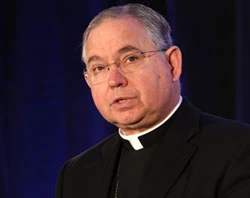
Thursday, January 6, 2011

10 Stories that Could Define Vatican in 2011


An interesting post from a British Catholic perspective.

This comes from the Catholic Herald.

----------------------------------------

Ten stories that are likely to define the coming year

For British Catholics, the past 12 months were both unsettling and exhilarating. Will the year ahead be as dramatic? Given the turbulent nature of the times, it is impossible to know for certain which themes will define the year. But here are 10 stories that we believe are likely to dominate 2011 and have a far-reaching impact on the Church.

The ordinariate: In arguably one of most interesting developments in English Christianity since the Oxford Movement, groups of former Anglicans will form the first personal ordinariate. The English ordinariate will become a model for similar ventures around the world.

Persecution in the Middle East: The bombing of the Coptic church in Alexandria was al-Qaeda’s way of saying that no Christian in any Middle Eastern country is safe. The terror network is likely to wage a concerted campaign this year to drive Christianity out of its ancient heartlands.

Post-papal visit renewal: Many of us are still trying to absorb the impact of Benedict XVI’s trip to Britain. There is a danger that, if we continue to simply bathe in the visit’s warm afterglow, we will miss a key opportunity for spiritual renewal.

The Church and the Coalition: Archbishop Vincent Nichols of Westminster has said that the papal visit seemed to herald a new era in relations between Church and state. But will the new spirit of cooperation survive the Coalition’s decision to place abortion at the forefront of overseas aid and to drive through controversial cuts?

Apostolic Visitation to Ireland: This year the Apostolic Visitators will attempt to discover what went wrong with the Irish Church and how it might be corrected. If Rome can draw the right conclusions about the malaise it can ensure that the scandal is not repeated elsewhere.

Reforming the Legion of Christ: No less important is the radical re-shaping of the most dynamic post-Vatican II clerical religious congregation, the Legion of Christ, and its lay movement, Regnum Christi. Pope Benedict has rejected the easy option of simply abolishing the Legion and will devote much energy in 2011 to salvaging the wreckage left behind by Marcial Maciel.

The referendum in Sudan: This month the people of southern Sudan (many of whom are Catholic) will vote on whether to secede from the north. Khartoum has warned them to expect violence if they opt for independence. Will anyone defend them?

Sino-Vatican ties: Before Christmas relations between Rome and Beijing deteroriated dramatically. Chinese state media accused the Pope of behaving “like a western politician”, while the Vatican said the Chinese authorities had engaged in “unacceptable and hostile acts”. Will Sino-Vatican ties continue to worsen in 2011?

SSPX talks: This might be the year that discussions between Rome and the Society of St Pius X finally bear fruit. As we report this week, SSPX leader Bishop Bernard Fellay is cautiously optimistic about full reconciliation. But we shouldn’t underestimate the obstacles that remain.

The Pope in Berlin: In September Benedict XVI will make his first papal trip to the German capital. Protests are expected, but the Pope may be able to charm the German public just as he did the British people. His scheduled address to the Bundestag is likely to be memorable.